


Vault12: Inherit Crypto Wallet
4.3130.00 Reviews
App Specs
- Version
- 3.0.0
- Updated On
- License
- Free
- Downloads
- 100,000+
- Developer
- Vault12, Inc
- Categories
- Finance
- Platform
- Android
Screenshots
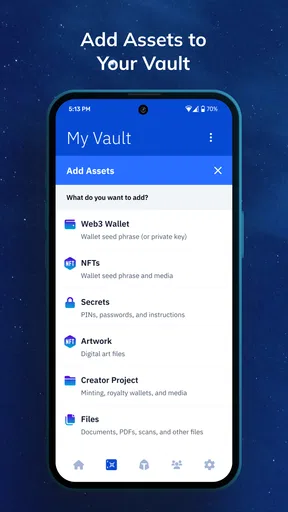
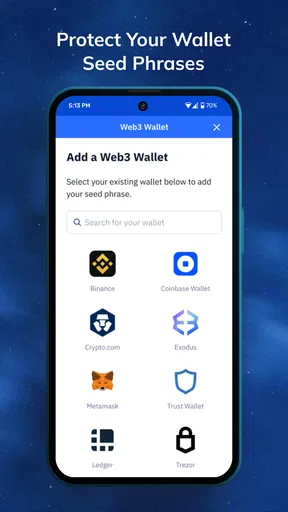
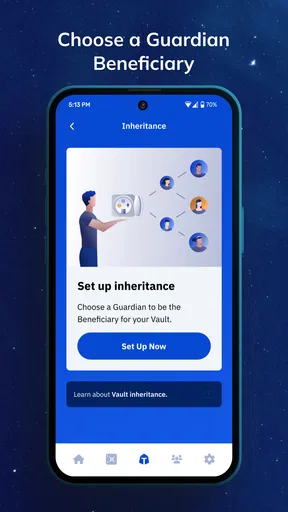
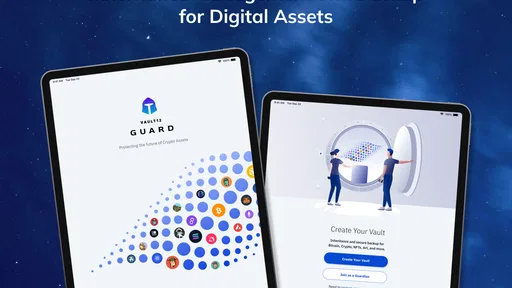
 Analysis by AppCompare
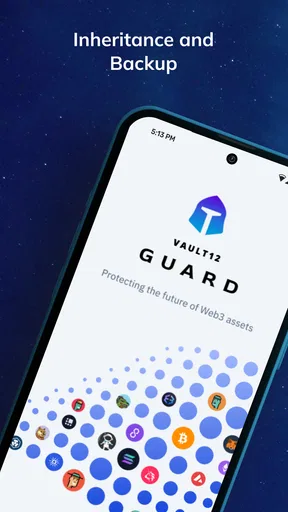
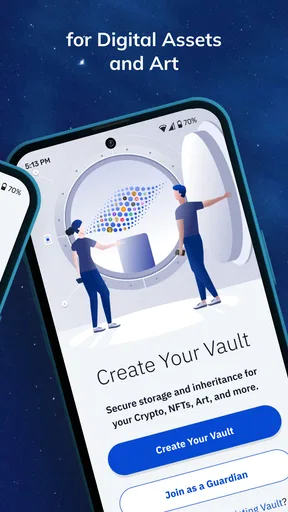
Crypto inheritance is one of those problems that feels distant until you realize how easily a wallet can become inaccessible. A forgotten recovery phrase, a damaged phone, or a family member who does not know where digital assets are held can turn a carefully managed portfolio into a permanent mystery. Vault12: Inherit Crypto Wallet takes aim at that specific gap by combining backup and inheritance planning for Bitcoin, Ethereum, Solana, stablecoins, and other crypto assets.
After using it as a finance app rather than treating it like another everyday wallet, I came away with a clear impression: this is most useful as a preparedness tool. It is not the app I would choose simply to make a quick payment or trade tokens. Its value appears when I think about continuity, trusted access, and what another person would need if I could no longer manage my own accounts.
The idea is practical, but it also demands careful setup and a realistic understanding of responsibility. No app can remove every risk involved in cryptocurrency custody. Vault12 can help organize an inheritance and backup plan, yet the quality of that plan still depends on the choices I make, the people I trust, and how carefully I protect access to the app itself.
What Vault12 does differently from an ordinary crypto wallet
Most crypto wallets are designed around the person holding the device today. They help with balances, addresses, transfers, and transaction approval. Vault12: Inherit Crypto Wallet approaches the problem from another direction: what happens later, when the original owner is unavailable and someone else needs a safe, understandable route to the assets?
That distinction matters. A conventional wallet may be perfectly adequate for spending or moving funds, but it often leaves inheritance planning to handwritten instructions, scattered files, or conversations that are easy to forget. Vault12 is built around the idea that backup and succession should be considered together rather than handled as an afterthought.
I found that framing more useful than the broad promise of “crypto security” often used by wallet apps. The relevant question here is not only whether I can access my assets. It is whether the right person can eventually understand what exists, follow the intended process, and do so without being handed an unnecessarily dangerous collection of secrets.
The app comes from Vault12, Inc and sits in the finance category. It is free to install, with optional in-app purchases priced from $19.99 to $29.99 per item. That pricing makes the initial evaluation relatively easy, but I would still avoid treating the free download as the complete cost of a long-term inheritance arrangement. Before committing to a paid option, I would first map out exactly which assets and people the plan needs to cover.
Worth Reading Before You Choose

EA SPORTS FC Mobile 26 Is a Bigger Football Game, but It Takes Time

Flipboard Shows What News Apps Must Do Beyond the Feed

Switching to Android Auto Means Rethinking Your Driving Routine

Google Calendar Makes a Crowded Week Easier to Manage

Ludo King Makes the Most of the Minutes Between Plans

Baby Panda World Brings Quick Play to Modern Phones, but Its Game Library Feels Busy
Why the inheritance focus is genuinely useful
The strongest part of this concept is that it encourages a conversation many crypto owners postpone. A person may know the difference between a public address and a private key, but a relative may not. They may also have no idea which networks matter, where instructions are stored, or how to distinguish a legitimate recovery step from a phishing attempt.
Using Vault12 as part of a wider plan can make those questions visible while I am still available to answer them. I can decide who should be informed, what level of explanation is appropriate, and which assets need special attention. That is more responsible than assuming a family member will discover a wallet and somehow work out the rest.
A useful workflow is to create a written inventory outside the app that explains the broad structure of the estate without exposing sensitive credentials in ordinary notes. I would include the types of assets involved, the networks that matter, and the location of the formal instructions. Then I would review that inventory after major changes, such as moving funds to a new chain or replacing a device. This is not a flashy feature, but it is the kind of habit that determines whether an inheritance plan works in real life.
Another non-obvious benefit is psychological: separating daily trading from long-term succession can reduce impulsive decisions. If I use one wallet for frequent transfers and another arrangement for assets intended to remain untouched, I am less likely to confuse spending money with estate holdings. Vault12 makes more sense in that second role than as a replacement for every wallet I already use.
Support for a broad mix of crypto assets
The app is intended for Bitcoin, Ethereum, Solana, stablecoins, and other crypto assets. That breadth is important because inheritance becomes complicated when holdings are spread across several ecosystems. A plan that works for one network may not be enough for another, especially when assets use different wallet formats, applications, or transaction habits.
I would not interpret the broad asset coverage as permission to stop checking the details of each holding. A stablecoin on one network is not automatically interchangeable with a similarly named token on another. Likewise, a beneficiary who understands Bitcoin may still be confused by an Ethereum-based token or a Solana asset. The more varied the portfolio, the more valuable clear human instructions become.
My practical advice is to test the plan with a small, non-critical amount or a simulated handover before relying on it for an entire portfolio. The purpose is not to make a risky transfer. It is to see whether the intended recipient understands the sequence, whether the instructions are readable, and whether the process depends on knowledge that only the original owner has.
This is also where the app’s role needs to be kept realistic. It may organize inheritance and backup, but I would still maintain a separate record of tax documents, exchange accounts, hardware devices, and any assets not held in the same place. A crypto inheritance plan that covers only one wallet can leave a misleading sense of completeness.
A realistic everyday scenario
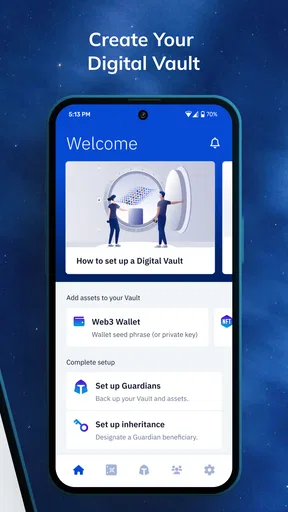
Imagine that I hold a small Bitcoin position, some Ethereum, and stablecoins spread across different uses. I check the portfolio every few weeks, but I do not want a family member to receive a box of confusing notes or an unlocked phone. With Vault12, I would begin by identifying the people who may need to act, then write plain-language instructions explaining the purpose of the arrangement and the order in which they should seek help.
I would keep the instructions practical rather than technical. Instead of writing a long explanation of blockchain theory, I would identify the relevant asset groups, explain which device or account matters, and warn the recipient not to share sensitive information with anyone who contacts them unexpectedly. I would then revisit the plan whenever the portfolio changes significantly.
If I were traveling, replacing a phone, or changing the way I store recovery information, that would be a good moment to review the setup. The point is not to open the app every day. The point is to prevent an old plan from quietly becoming inaccurate.
In this scenario, Vault12 is valuable because it gives inheritance a defined place in my financial organization. It does not replace a lawyer, tax professional, or trusted technical adviser, but it can serve as the crypto-specific layer in a larger estate plan.
The friction and risks I would take seriously
The biggest weakness is not necessarily a missing convenience feature; it is the complexity of the problem itself. Inheritance requires trust decisions that cannot be automated away. Choosing the wrong person, documenting too much, or making the instructions too vague can create problems even when the app works as intended.
I would be especially careful about the device and account used to manage the plan. A backup tool becomes part of the security boundary. If someone gains access to the phone, credentials, or recovery material, the inheritance arrangement may become a target rather than a safeguard. I would avoid storing casual screenshots, copying secrets into ordinary messaging apps, or explaining the entire setup in a single unprotected document.
There is also a trade-off between accessibility and secrecy. If I make the process too difficult, a beneficiary may give up or seek help from the wrong person. If I make it too easy, an unauthorized person may learn enough to interfere. Vault12 can help structure the arrangement, but I still have to choose the right balance and explain it to the people involved.
Another limitation is that this is not an ideal fit for someone who wants a minimalist wallet for quick transactions. A person who buys a small amount of cryptocurrency occasionally may find inheritance planning excessive. Likewise, active traders who need rapid portfolio management will probably prefer a dedicated trading platform or a conventional wallet designed around frequent use.
The app also requires ongoing discipline. A plan created once and forgotten is not a reliable plan. New assets, changed devices, altered relationships, and different storage methods can all make old instructions misleading. I would schedule a review alongside other financial paperwork rather than assuming the app itself will keep everything current automatically.
How it compares with the usual alternatives
The simplest alternative is a paper note stored with other important documents. Paper is easy to understand and does not depend on a particular app, but it can become outdated, be discovered by the wrong person, or fail to explain a multi-network portfolio. A basic note may also expose more sensitive information than necessary.
A password manager is another common option. It can be excellent for organizing account details, but it is not automatically an inheritance workflow. The owner still has to decide how a beneficiary gains access, what information they receive, and how crypto-specific instructions are separated from ordinary passwords. Vault12’s focused purpose is its advantage when the central concern is digital-asset succession rather than general credential storage.
Hardware wallets can provide strong control for long-term holders, yet they do not solve the human handover problem by themselves. A device in a safe is not enough if the beneficiary cannot identify it, understand the recovery process, or tell legitimate instructions from a scam. Vault12 is better viewed as a companion to secure storage than as a universal substitute for it.
Legal estate planning can provide formal structure, but a will alone may be too broad or too public for sensitive wallet details. I would not put recovery secrets into a document that may pass through multiple hands. The more sensible approach is to coordinate legal instructions with a separate, carefully protected crypto plan. Vault12 is relevant in that gap, although it should not be mistaken for legal advice.
Who will get the most from it
I think the best audience is a long-term crypto holder who owns assets across more than one network and wants a deliberate plan for family or another trusted beneficiary. It is also suitable for someone who has already experienced how hard it is to explain a wallet to a non-technical person and wants to turn scattered instructions into a more structured process.
It may be particularly helpful for people who keep crypto as part of broader savings rather than trading constantly. For them, the main benefit is not speed. It is reducing the chance that assets disappear from view because nobody knows they exist or understands how they are meant to be handled.
I would recommend approaching the app with a short preparation checklist:
- List every relevant asset and network before deciding what the inheritance plan must cover.
- Choose a beneficiary or trusted helper based on reliability, not merely technical confidence.
- Write instructions in ordinary language and include warnings about scams and unsolicited assistance.
- Test the explanation without exposing the full set of sensitive credentials.
- Review the arrangement after major portfolio, device, or family changes.
These steps make the app more useful because they address the human weaknesses around custody. Without them, even a well-designed inheritance tool can become another forgotten account.
What new users should know before paying
The free price makes it reasonable to explore the app before deciding whether an optional purchase fits my situation. I would first clarify whether my holdings, intended beneficiaries, and preferred storage methods all belong in the same plan. A paid item may be worthwhile for a serious long-term arrangement, but I would not buy it simply because the word “inheritance” creates urgency.
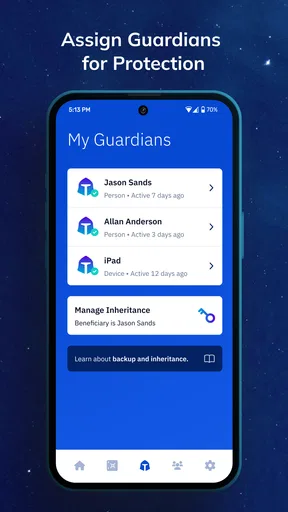
I would also make sure the people involved understand their roles. A beneficiary is not necessarily the same as a technical custodian, executor, or adviser. Combining those responsibilities can be convenient, but it can also create a single point of failure. Separating duties may be wiser when the portfolio is important or the family situation is complicated.
The app is rated for Everyone, which makes its general presentation approachable, but that should not be confused with low stakes. The subject matter involves financial assets and irreversible mistakes. I would use simple explanations for a beneficiary while keeping the actual security decisions as cautious as I would with any serious financial account.
The current version is 3.0.0, and the app has been available since August 28, 2019. Its presence on the platform is supported by over 100 thousand installs, with a 4.3 average from 891 ratings and 130 written reviews. Those figures suggest that people have found the concept useful, but they do not remove the need for personal testing. An inheritance workflow should be judged by whether my own chosen recipient can follow it, not only by its public reception.
My verdict on Vault12: Inherit Crypto Wallet
Vault12: Inherit Crypto Wallet is strongest when I treat it as a long-term continuity tool, not as a daily spending wallet. Its focus on inheritance and backup addresses a real weakness in cryptocurrency ownership: assets can be technically secure yet practically lost because nobody else knows how to handle them.
I like the way it encourages a more complete conversation about Bitcoin, Ethereum, Solana, stablecoins, and other holdings. I also appreciate that it fits a problem ordinary wallet apps usually leave to handwritten notes and guesswork. The main caution is that the app cannot make trust, documentation, and device security effortless. I still need to maintain accurate records, protect access, and review the plan as circumstances change.
I would recommend it to a serious holder who wants family or another trusted person to have a clearer path forward. I would skip it if my only goal were quick transfers, active trading, or a simple wallet for occasional purchases. For the right user, though, it fills a specific and often neglected role. It is a sensible addition to a broader estate and security plan, provided I remember that the app is the framework—not the whole inheritance strategy.
Pros
- Non-custodial design keeps control of private keys with the user.
- Inheritance planning helps define how assets may be accessed later.
- Supports secure sharing of selected wallet information with trusted contacts.
- Useful for organizing digital-asset access across multiple beneficiaries.
- Focuses on long-term crypto estate planning rather than daily trading.
Cons
- Requires careful setup; mistakes in inheritance rules could affect access.
- Beneficiaries may need technical knowledge to recover or use the assets.
- Recovery can be difficult if trusted contacts become unavailable.
- Crypto transfers remain subject to network fees and blockchain delays.
- Not a replacement for legal estate documents or professional advice.
FAQs for Vault12: Inherit Crypto Wallet
What is Vault12: Inherit Crypto Wallet?
Vault12: Inherit Crypto Wallet is designed to help users protect digital assets and plan how trusted people may access them in the future. Rather than functioning only as a standard crypto wallet, it focuses on inheritance and recovery planning. Before downloading, users should understand which cryptocurrencies and networks are supported, how ownership is verified, and whether the inheritance features match their personal estate-planning needs.
How does the inheritance feature work in Vault12?
The app is intended to let users establish an inheritance arrangement for selected digital assets, usually by identifying trusted beneficiaries and defining conditions for access. The exact process can depend on the wallet configuration, verification steps, and any required waiting or confirmation period. Users should carefully review every recovery and beneficiary option, because mistakes in these settings could make access difficult or expose assets to the wrong person.
Is Vault12 a secure wallet for storing cryptocurrency?
Vault12 places strong emphasis on protecting private keys and planning secure access, but no crypto wallet can remove every risk. Security also depends on the user’s device, passwords, recovery information, beneficiary choices, and protection against phishing or malware. You should download the app only from an official store, keep the operating system updated, avoid sharing sensitive credentials, and verify all recovery instructions before transferring valuable assets.
Which cryptocurrencies and devices are supported?
Compatibility is one of the most important details to check before installing Vault12. Support may vary by cryptocurrency, blockchain network, wallet type, and operating system version, and not every token may be available for inheritance planning. Review the current Google Play or App Store listing and the developer’s documentation for supported assets, device requirements, regional availability, and any limitations that could affect your intended use.
Can Vault12 replace a will or professional estate plan?
Vault12 may help organize access to digital assets, but it should not automatically be treated as a replacement for a legally valid will, trust, or professional estate plan. Cryptocurrency inheritance can involve taxes, local laws, ownership records, and family disputes that an app cannot resolve by itself. If your holdings are substantial, consult a qualified legal or financial professional and make sure your app settings agree with your broader estate documents.


